
Roller Chain vs. Belt Drives: A Guide to Selecting the Right Transmission for Your Application
In the power transmission link of mechanical systems, roller chains and belt drives are two of the most widely used basic solutions. Although both are flexible transmission devices, their fundamental structural differences result in distinctly different characteristics in terms of load capacity, environmental adaptability, and precision control. Choosing the wrong transmission method can lead to a sharp decrease in equipment efficiency, soaring maintenance costs, and even safety hazards, while accurately matching the working conditions allows the transmission system to become the “power lifeline” for stable equipment operation. This article will analyze the applicable boundaries and selection logic of these two transmission methods, starting from core performance indicators and combining typical industry scenarios.
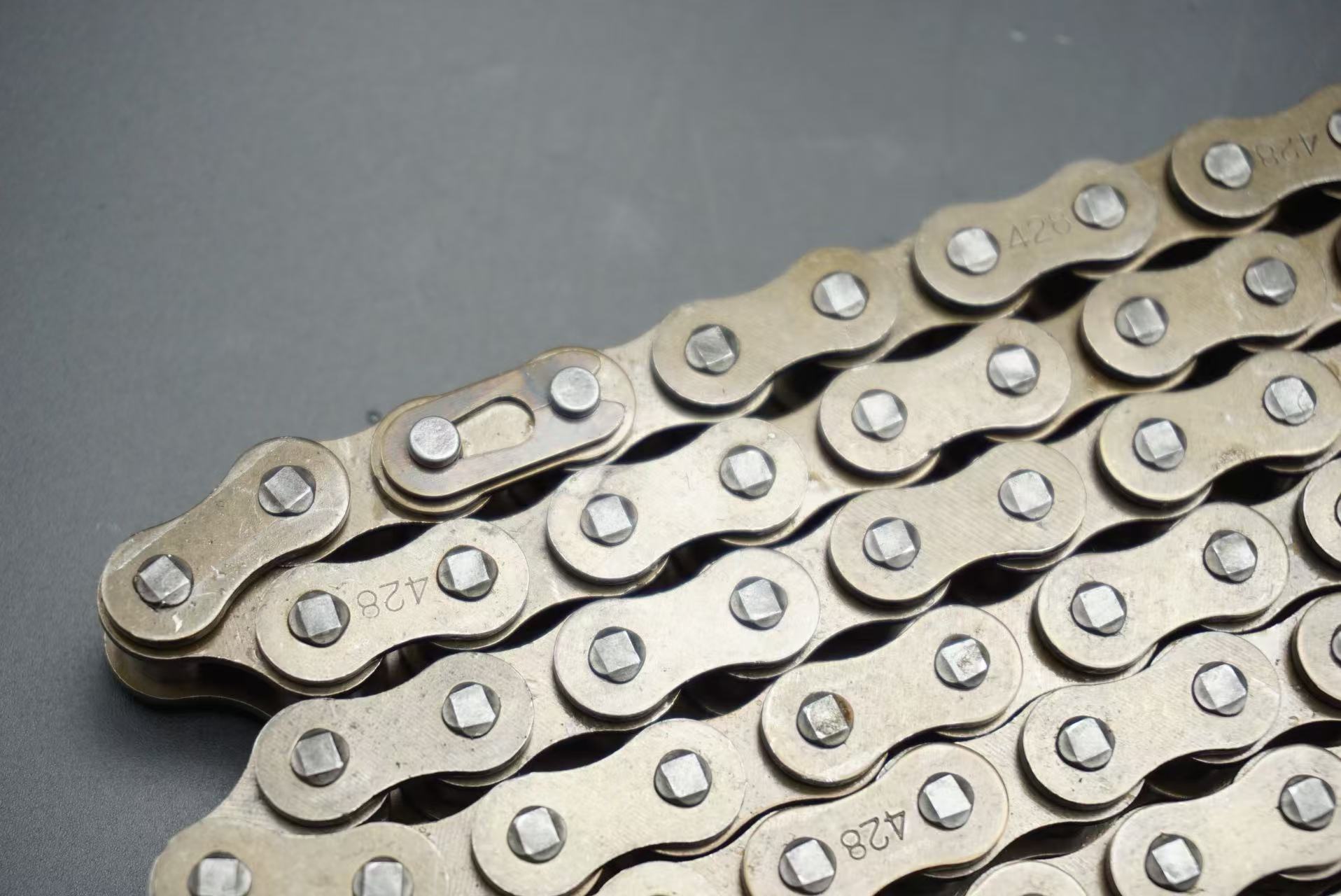
I. Core Performance Differences: The Underlying Logic of Selection
The essence of transmission system selection is matching performance with requirements. The core differences between roller chains and belt drives lie in key indicators such as transmission accuracy, load capacity, and energy loss. These differences directly determine their suitability for different working conditions.
II. Scenario-Based Comparison: Which Working Conditions are More Suitable for Roller Chains?
The meshing transmission characteristics and structural strength of roller chains give them irreplaceable advantages in harsh environments, heavy-load requirements, and precision control scenarios. The following three types of scenarios are particularly typical.
1. Heavy Load and Harsh Environments: Mining, Agriculture, and Heavy Industry
The power transmission systems of ore conveyors in mining and harvesting machines in agriculture often face complex working conditions such as dust, material impact, and instantaneous heavy loads. In these cases, belt drives are prone to slippage and shutdown due to reduced friction coefficient caused by dust accumulation, while roller chains, through the rigid meshing of sprockets and links, can stably transmit large torques. Even if the chain is covered with slag or grains, it will not affect the transmission efficiency. A roller chain system used by a mining machinery factory, with a chain length of 30 meters, can still stably carry 200kW of power, ensuring continuous operation of the conveyor. Under high-temperature conditions, ordinary belts are prone to aging and cracking. However, KV-specification roller chains made of super engineering plastics can operate continuously in high-temperature furnaces at 180℃, while also possessing flame retardancy and wear resistance, perfectly matching the high-temperature material conveying needs of the metallurgical industry.
2. Precision-dependent equipment: Food processing and packaging machinery
Food filling lines and packaging machinery require strict control of transmission synchronization to ensure precise coordination of material conveying, filling, and sealing actions. The constant transmission ratio of roller chains avoids filling volume deviations caused by speed fluctuations. Furthermore, plastic roller chains that comply with food hygiene regulations not only eliminate the risk of lubrication oil contamination but also reduce maintenance frequency due to their self-lubricating properties, making them suitable for clean environments such as biscuit production lines and dairy product filling.
In contrast, while synchronous belts can meet precision requirements, in the humid environment of food processing workshops, the rubber material is prone to moisture absorption and deformation, affecting transmission stability, and the replacement cost is significantly higher than that of roller chains.
3. Long-term continuous operation equipment: Port lifting and logistics conveying
Port container cranes and logistics sorting lines require 24-hour continuous operation, demanding extremely high reliability and lifespan from the transmission system. After heat treatment, the metal structure of the roller chain significantly improves the wear resistance of the chain plates and pins. With regular lubrication, the service life can reach over 5000 hours; while ordinary V-belts are prone to cracking due to fatigue during continuous operation and usually need to be replaced after 2000 hours, increasing downtime and maintenance costs.
III. Advantages of Belt Drives: When is a Belt a Better Choice?
Although roller chains have significant advantages, in scenarios requiring high-speed, smooth operation, low noise, and low initial investment costs, belt drives still have a clear competitive edge. The following scenarios prioritize belt solutions.
1. High-speed, low-load requirements: Fans, machine tools, and home appliances
Equipment such as fans and water pumps require high-speed operation (usually 5-25 m/s) but with relatively low loads. The flexible characteristics of belt drives can buffer the impact load during motor startup and reduce operating noise. The spindle of a certain machine tool uses V-belt transmission, which not only achieves smooth speed transmission but also improves the surface accuracy of the machined parts due to the damping effect of the belt.
Household appliances such as washing machines and air conditioner compressors tend to choose low-cost V-belt transmission. Its simple structure and convenient installation effectively control manufacturing costs, and it is sufficient to meet the service life requirements under light load conditions.
2. Low Noise and Vibration Damping Requirements: Office Equipment and Precision Instruments
Office equipment such as printers and plotters have extremely strict requirements for operating noise and vibration control. Synchronous belt transmission achieves precise transmission through tooth meshing, while the cushioning effect of the rubber material keeps the noise below 40 decibels, far lower than the operating noise of roller chains (usually 60-80 decibels).
Although the servo feed system of CNC machine tools requires high precision, the load is relatively small. The lightweight characteristics of synchronous belts (more than 30% lighter than roller chains) can improve system response speed, making them more suitable for high-speed start-stop conditions.
3. Large Center Distance and Low Cost Scenarios: Textile and Woodworking Machinery
In the winding mechanisms of textile factories and woodworking sanding machines, the center distance between the motor and the working shaft often exceeds 5 meters. In this case, roller chains require longer chains, which are prone to vibration and wear. Flat belt transmission, however, can adapt to large center distances by adjusting the tensioning device, and the initial purchase cost is only 1/3 to 1/2 of that of roller chains, significantly reducing equipment investment.
IV. Selection Decision Tree: Four Steps to Determine the Optimal Transmission Solution
When faced with specific working conditions, the following four steps can be used to quickly determine the appropriate transmission method and avoid selection errors:
1. Clarify Core Requirements: Prioritize determining whether precise transmission ratio is required (e.g., packaging machinery). If so, exclude ordinary V-belts; if it is high-speed and low-load (e.g., fans), belt transmission is more advantageous.
2. Evaluate Working Environment: If there is oil, dust, high temperature (≥80℃), or humidity, directly choose roller chains; in a clean and dry environment, consider belt transmission to reduce costs. 3. Load and Lifespan Considerations: For power transmission exceeding 50kW or requiring continuous operation for more than 10,000 hours, multi-row roller chains are preferred; for low to medium power applications where periodic shutdowns for replacement are acceptable, belt drives are more economical.
4. Maintenance Cost Considerations: In situations lacking professional maintenance personnel, self-lubricating roller chains can be chosen; if zero lubrication maintenance is desired, synchronous belts are an alternative, but environmental humidity and temperature must be controlled.
Post time: Dec-17-2025