
Roller Chain Rust Prevention, Packaging and Storage
Rust on industrial roller chain is one of the most common and most contested reasons for rejection at the receiving dock. A chain that leaves the factory bright and clean can arrive weeks later covered in a faint orange bloom, and the argument over who pays begins immediately. For distributors, OEMs and end users who import chain by sea, the real work of corrosion control happens long before installation and long after the product is boxed. This article focuses on factory rust prevention, packaging choices, warehouse discipline and the objective judgment of corrosion at arrival, the four areas that decide whether a shipment is accepted or becomes a claim.
Why Chain Rust Triggers “Claim on Arrival” Disputes
Roller chain is mostly carbon steel with a thin, highly reactive surface that was just ground, shot-blasted or heat-treated. That surface grabs moisture fast. During ocean freight the container interior swings through wide humidity cycles, and a steel coil that feels dry in the morning can sit in a micro-climate of condensation by night. The relative humidity inside a poorly ventilated container repeatedly crosses the dew point, and water films form on the metal even when the outside air is calm. Sea air adds chloride, and chloride is the single most aggressive accelerant of red rust on unprotected steel.
Day-night temperature differences create dew on the chain surface without any visible leak. Salt spray drifting from the deck, combined with the chloride already in the air, attacks the edges of plates and the ends of pins first. Human handling adds another factor most people forget: hand sweat. Oily fingerprints left on a freshly made chain become rust spots after two weeks in a warm box. Finally, storage time itself is the silent driver. A chain specified for three months of protection that sits in a transit warehouse for seven months will fail, not because the product was bad, but because the protection window was exceeded. These combined factors explain why rust, more than dimensional error or strength, is the leading cause of “arrived and already claimed” incidents in imported chain.
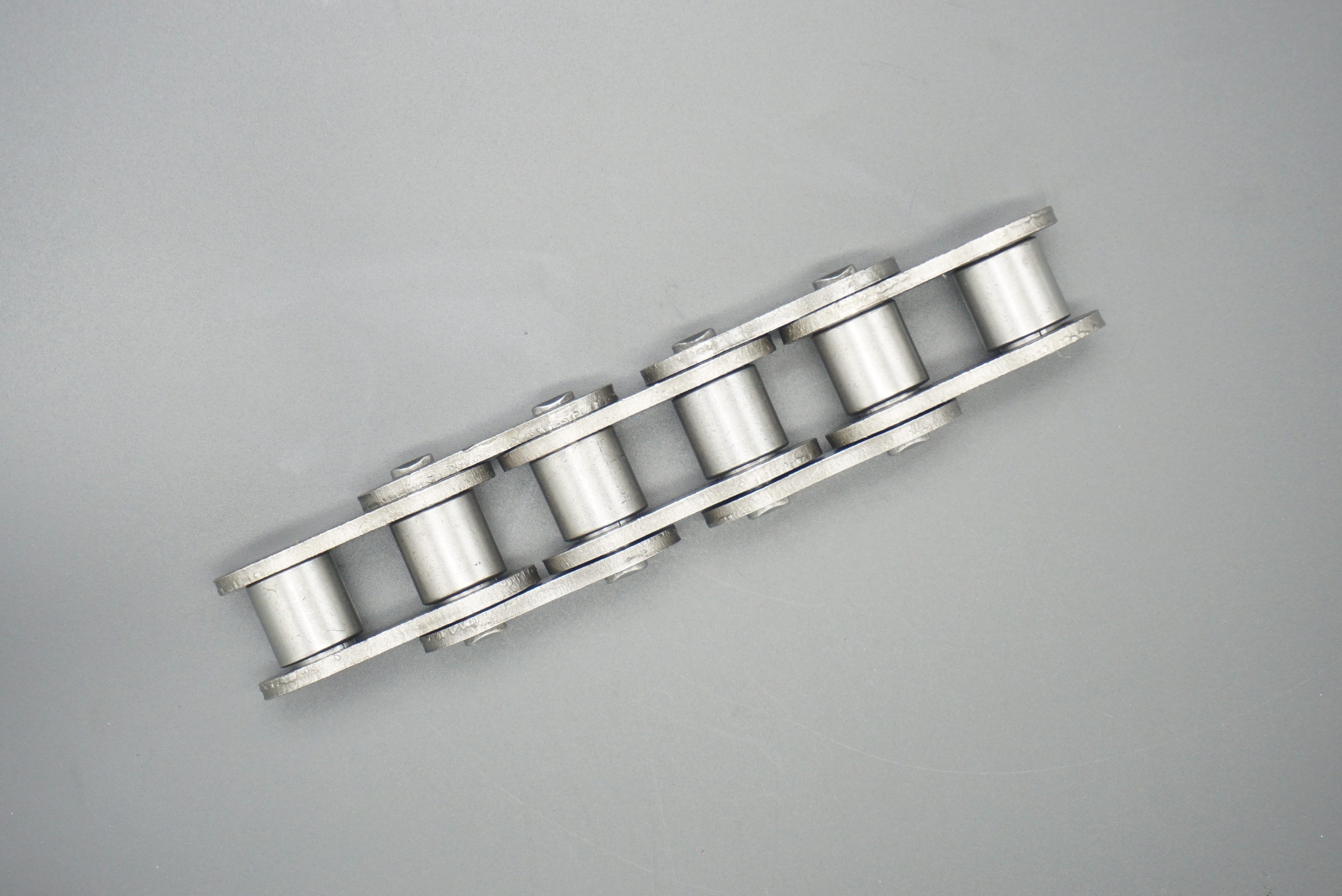
Factory Anti-Rust Options and How They Compare
Several rust-prevention treatments are available at the factory, and each trades protection length against later cleaning cost. Rust-preventive oil or grease is the cheapest and most common. It protects well for three to six months in normal storage and is easy to apply, but it must usually be wiped or washed off before lubrication, and it attracts dust in dirty plants. VCI paper and VCI bags use vapor-phase corrosion inhibitors that form a molecular shield on the metal without touching it. The VCI paper and bags work for six to eighteen months depending on the barrier film, leave no residue, and need no cleaning before use, which makes them popular for precision and export chain. Wax film coatings give longer static protection, up to twelve months, but require solvent removal before relubrication.
Phosphating and blackening are conversion coatings that improve paint or oil holdout and give short-term indoor protection of one to three months; they are not standalone outdoor protection. Galvanizing and Dacromet, discussed in our separate surface-treatment article, are permanent sacrificial or barrier layers rather than temporary preservatives, and the Dacromet coating in particular is chosen when the chain must survive harsh environments without any added oil. For most general-purpose roller, conveyor and agricultural chain shipped overseas, the practical choice is anti-rust oil for short transit or VCI for medium to long transit where cleaning before use is undesirable. The cost of later cleaning should be written into the buying decision, not discovered on the line.
The Conflict Between Rust Prevention and Later Lubrication
A frequent mistake is to treat the factory preservative as the working lubricant. It is not. Rust-preventive oil is formulated to block water, not to carry load between pin and bushing, so running the chain on its factory oil shortens wear life. The question every buyer should ask is whether the preservative must be removed before startup. For oil-preserved chain the answer is usually yes for food and clean-room lines, and optional for dirty industrial drives where the new grease simply overlays the thin film. Compatibility matters: some heavy waxes block penetration of subsequent grease and cause uneven lubrication, while VCI residues are generally neutral and compatible with most industrial oils.
Food-grade applications add a hard constraint. Only NSF H1 registered lubricants and approved temporary preservatives may contact surfaces that can touch food. Standard rust-preventive oil is not H1 and must be fully removed and replaced with a registered grease before the chain enters a food line. Specifying the preservative type at order time prevents a costly wash-and-reapply cycle later.
Choosing the Right Packaging Form
Packaging form follows how the chain will be handled and cut. Reel or coil packaging suits long lengths for distributors who cut to order; it keeps the chain oiled and VCI-wrapped in one continuous unit. Drum packaging protects heavy coils from crushing and is common for mining and agricultural volumes. Boxed chain is preferred for fixed-length retail and spare-parts kits where the customer expects a clean carton. Single heat-shrink wrapping of one chain gives the best individual protection for high-value or stainless items, and cut-to-length pre-packaging reduces on-site handling and fingerprint exposure.
Traceability is not decoration. Every package should carry a label with specification, batch number and length, because a rust claim is impossible to resolve without knowing which heat and which preservative were used. The first-in first-out discipline depends on readable batch and date labels, so label quality is part of corrosion control, not stationery.
Boxing and Pallet Solutions
Once the inner pack is chosen, the outer box and pallet decide whether moisture reaches the chain. Use moisture-barrier inner liners for sea freight, and size the desiccant to the box volume rather than guessing; a common rule is roughly five hundred grams of desiccant per cubic meter for a thirty to sixty day voyage in moderate climate, more for tropical routes. Seal cartons with reinforced tape and consider heat-sealed liner bags for long transit. Limit stack height to protect lower cartons from compression that can break the inner VCI barrier, and manage container humidity with container desiccant poles or blankets so the whole shipment shares one dry micro-climate.
Warehouse Storage Requirements
In the warehouse the chain should live in a dry, ventilated room with relative humidity controlled below sixty percent and temperature stable as far as practical. Keep stock off the floor on pallets and away from walls to allow air movement and avoid rising damp. Enforce first-in first-out so older preservative windows expire first. Once a carton is opened, reseal it or move the remaining chain into a VCI bag; an opened, half-used coil is the fastest path to local rust. Define an allowed storage period, for example six or twelve months from manufacture depending on preservative, and schedule re-inspection of stock nearing expiry so marginal chain is used or reprocessed before it fails.
Tip: Never accept a sea freight chain shipment that shows carton swelling or liner condensation without opening and photographing the contents on the same day, because delayed inspection destroys the evidence needed to shift liability back to the carrier or supplier.
Arrival Inspection and Rust Grade Judgment
A rust claim fails when the parties cannot agree on what counts as rust. Define grades before shipment. Float rust is a loose, wipeable orange or yellow film with no surface pitting; on oil-preserved carbon chain it is often cosmetic and acceptable if it wipes clean and the base metal is sound. Pitting rust shows fixed brown spots or shallow craters that do not wipe away and indicate lost material. A corrosion pit is a deep, sometimes networked cavity that compromises section thickness and is never acceptable. The contract should state the sampling method, for example inspect two cartons per twenty, five coils per carton, and photograph every suspect area with a scale reference and batch label visible. Photo evidence with date stamp is the only durable record when liability is disputed.
Write the acceptance criterion directly into the purchase contract: for example, “float rust that wipes clean with no pitting on pins or plates is acceptable; any pitting or corrosion pit is rejectable and triggers replacement at supplier cost.” A clear written judgment criterion removes most arguments before they start.
Preventing Disputes Before They Happen
Dispute prevention is cheaper than dispute resolution. Agree a rust-prevention validity period matched to the real transit plus storage time, not the shortest factory option. State the packaging clause in detail: preservative type, VCI or not, liner, desiccant quantity, carton seal method and pallet wrap. Clarify marine insurance and liability split, for example risk transfers at container stuffing or at destination, and keep the preservative and packaging evidence with the shipping documents so a claim can be filed fast.
Execution Checklist for Purchasing and Storage
- Specify preservative type and protection window at order time, matched to expected transit plus warehouse days.
- Require VCI or oil preservation plus moisture liner and sized desiccant for all sea freight.
- Confirm labels carry specification, batch number and length on every inner and outer pack.
- Set warehouse relative humidity below sixty percent, off-floor and off-wall storage, and strict first-in first-out.
- Reseal or re-bag any opened coil the same day it is opened.
- Define rust grades, sampling plan and acceptance wording in the contract before shipment.
- Photograph carton condition and chain surface on arrival day, especially any swelling or condensation.
- Schedule re-inspection of stock approaching its allowed storage period.
FAQ
Does VCI packaging remove the need to oil the chain before use?
VCI prevents rust during storage and transit but does not replace operating lubrication. Apply the correct drive grease before startup; the VCI residue is normally compatible and needs no removal.
Is factory rust-preventive oil safe for food lines?
Standard rust-preventive oil is not food grade. For food or pharmaceutical lines the chain must use NSF H1 approved preservative and lubricant, or be fully cleaned and regreased with an H1 product before use.
What humidity should the warehouse hold?
Keep relative humidity below sixty percent with stable temperature and good air circulation. Higher humidity sharply raises the risk of condensation on cold chain surfaces.
How much rust is acceptable on arrival?
Float rust that wipes clean with no pitting is usually acceptable on carbon chain; any pitting or corrosion pit is rejectable. The exact wording should be agreed in the contract before shipping.
Can opened chain be returned to storage?
Yes, but it must be resealed in its VCI bag or moved to a fresh VCI pack the same day. An opened coil left on a bench will spot-rust within days in humid air.
Related Pages
- Maintenance Cost Comparison of Roller Chains and Chain Drives
- The Lifespan Advantage of Roller Chains vs Belt Drives
- Selection of Standard and Non-Standard Roller Chains
- Key Factors Influencing Roller Chain Prices
Post time: Oct-30-2026