
How does roller chain lubrication method influence selection?
According to industry statistics, approximately 60% of premature roller chain failures are due to improper lubrication. The choice of lubrication method isn’t a “post-maintenance step” but a core consideration from the very beginning. Whether exporting to industrial manufacturing, agricultural machinery, or food processing, ignoring the matching of lubrication method with chain characteristics can significantly shorten chain life and increase operational costs, even with the correct model and material. This article will categorize lubrication methods, analyze their key impact on selection, and provide practical selection methods to help you avoid common selection errors in export operations.
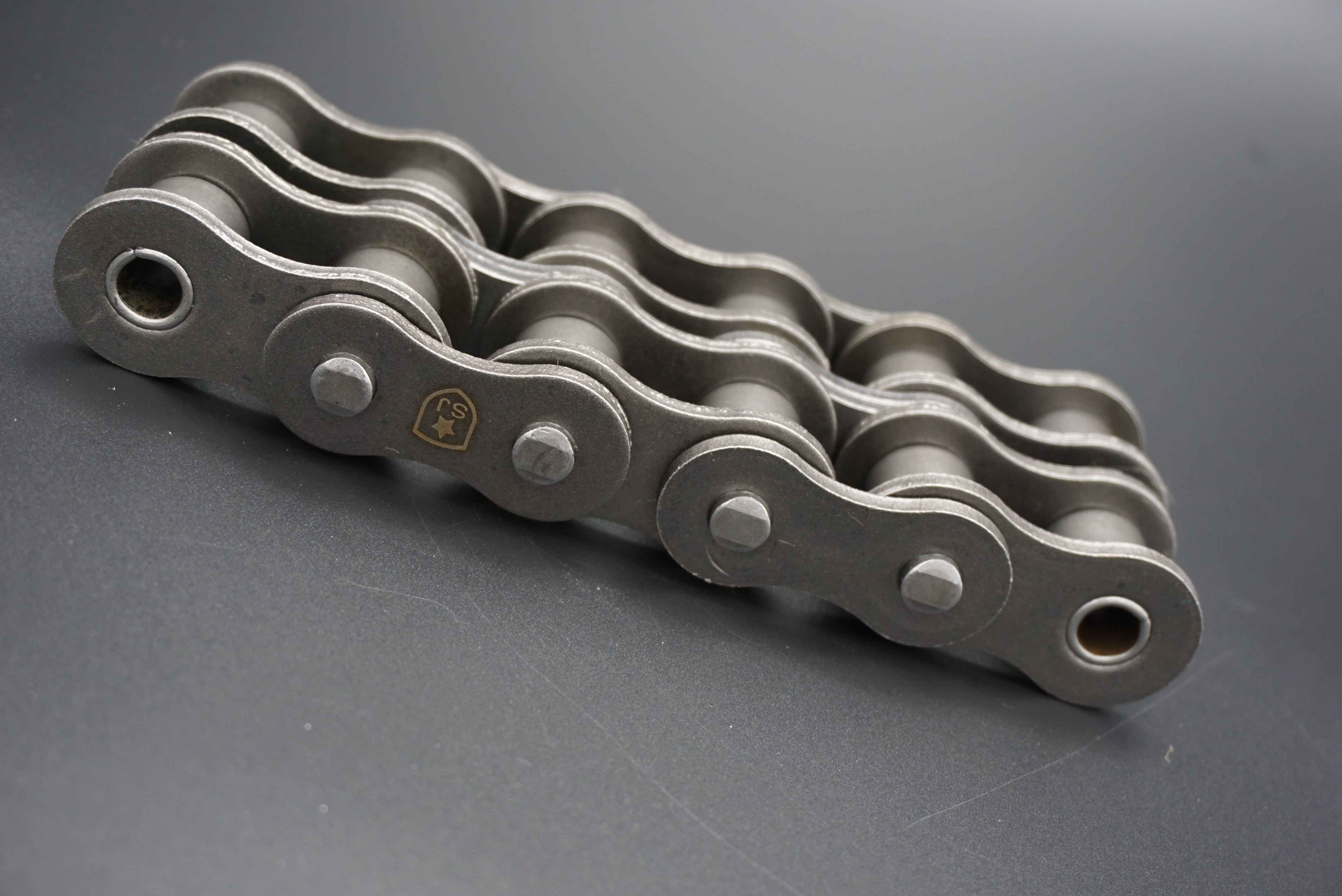
1. Understanding the Core Differences Between the Four Main Roller Chain Lubrication Methods
Before discussing selection, it’s crucial to clearly define the applicable boundaries of different lubrication methods. Their distinct oil supply efficiency, environmental adaptability, and maintenance costs directly determine the “innate characteristics” required of the chain.
1. Manual Lubrication (Applying/Brushing)
Principle: Lubricant is applied regularly to friction points such as chain pins and rollers using a brush or oiler.
Key Features: Low equipment cost and simple operation, but uneven lubrication (prone to “over-lubrication” or “under-lubrication”) and lack of continuous lubrication are common.
Applicable Applications: Open environments with low speeds (linear speeds < 0.5 m/s) and light loads (loads < 50% of rated load), such as small conveyors and manual lifts.
2. Oil Drip Lubrication (Oil Dripper)
Principle: A gravity-fed oil dripper (with a flow control valve) drips a fixed amount of lubricant into the chain friction pair. The oiling frequency can be adjusted according to operating conditions (e.g., 1-5 drops/minute).
Key Features: Relatively uniform lubrication and targeted lubrication of key areas are possible. However, this method is not suitable for high-speed applications (oil droplets are easily dislodged by centrifugal force) and requires regular oil tank refilling. Applicable Applications: Semi-enclosed environments with medium speeds (0.5-2 m/s) and medium loads, such as machine tool drive chains and small fan chains.
3. Oil Bath Lubrication (Immersion Lubrication)
Principle: A portion of the chain (usually the lower chain) is immersed in a lubricating oil reservoir in a closed box. During operation, the oil is carried by the rollers, ensuring continuous lubrication of the friction surface and also providing heat dissipation.
Key Features: Sufficient lubrication and excellent heat dissipation, eliminating the need for frequent oil replenishment. However, the chain has high operating resistance (the immersed portion is affected by oil resistance), and the oil is easily contaminated by impurities and requires regular replacement.
Applicable Applications: Enclosed environments with high speeds (2-8 m/s) and heavy loads, such as chains within reducers and chains for large gearboxes.
4. Spray Lubrication (High-Pressure Oil Mist)
Principle: Lubricating oil is atomized by a high-pressure pump and sprayed directly onto the chain friction surface through a nozzle. The oil mist has fine particles (5-10 μm) and can cover complex structures without additional resistance. Key Features: High lubrication efficiency and adaptability to high-speed/high-temperature applications. However, specialized spray equipment (which is costly) is required, and oil mist must be recovered to avoid environmental contamination.
Applicable Applications: High-speed (>8 m/s), high-temperature (>150°C), or dusty open environments, such as mining crusher chains and construction machinery drive chains.
II. Key: The Three Determining Influences of Lubrication Method on Roller Chain Selection
When selecting a roller chain, the core principle is to “determine the lubrication method first, then the chain parameters.” The lubrication method directly determines the chain’s material, structural design, and even subsequent maintenance costs. This is reflected in three specific dimensions:
1. Material and Surface Treatment: The “Basic Threshold” for Lubrication Environment Compatibility
Different lubrication methods correspond to different environmental characteristics, and the chain material must possess corresponding tolerances:
Oil Bath/Spray Lubrication: When using industrial lubricants such as mineral oil and synthetic oil, the chain is susceptible to oil and impurities. Rust-resistant materials should be selected, such as galvanized carbon steel (for general use) or stainless steel (for humid or mildly corrosive environments). For high-temperature applications (>200°C), heat-resistant alloy steels (such as Cr-Mo steel) should be selected to prevent softening due to the high temperature. Manual Lubrication: For use in the food industry (e.g., food conveyors), food-grade compatible materials (e.g., 304 stainless steel) must be selected, and the surface must be polished to prevent lubricant residue and bacterial growth. Food-grade lubricants (e.g., white oil) should also be used.
Dusty Environment + Spray Lubrication: Dust easily adheres to the chain surface, so a wear-resistant surface treatment (e.g., carburizing, quenching, or phosphating) is required to prevent dust from mixing with the lubricant to form “abrasives” and accelerate chain wear.
2. Structural Design: Matching the Lubrication Method is the Key to Efficiency
The chain’s structural details must “serve” the lubrication method; otherwise, lubrication failure will occur.
Manual Lubrication: Complex construction is not required, but a large chain pitch (>16mm) and appropriate clearance are required. If the pitch is too small (e.g., less than 8mm), manual lubrication will have difficulty penetrating the friction pair, creating “lubrication blind spots.” Oil bath lubrication: A closed guard must be used to prevent oil leakage and impurities from entering, and the chain must be designed with an oil guide groove to direct oil back to the oil reservoir, reducing waste. If the chain requires lateral bending, space for oil flow must be reserved within the guard.
Spray lubrication: The chain must be designed with open chain plates (such as hollow chain plates) to prevent oil mist from being blocked by the chain plates and preventing it from reaching the friction surface between the pins and rollers. Additionally, oil reservoirs must be provided at both ends of the chain pins to temporarily store oil mist and extend lubrication effectiveness.
3. Operating Condition Compatibility: Determines the Chain’s “Actual Service Life”
Choosing the wrong lubrication method for the right chain can directly shorten the chain’s service life by more than 50%. Typical scenarios are as follows:
Mistake 1: Choosing “manual lubrication” for a high-speed (10 m/s) chain – Manual lubrication cannot keep up with the friction requirements of high-speed operation, resulting in roller wear and pin seizure within a month. However, choosing spray lubrication with hollow chain plates can extend the service life to 2-3 years. Misconception 2: Choosing “oil bath lubrication” for chains in the food industry—oil baths can easily retain oil residue inside the shield, and oil changes can easily contaminate food. Choosing “manual lubrication with 304 stainless steel chain” with food-grade lubricant meets hygiene standards and offers a lifespan of over 1.5 years.
Misconception 3: Choosing “ordinary carbon steel with drip lubrication” for chains in humid environments—drip lubrication doesn’t fully cover the chain surface, and humid air can cause rust. Choosing “galvanized carbon steel with oil bath lubrication” (a closed environment isolates moisture) can prevent rust.
III. Practical Application: A 4-Step Guide to Roller Chain Selection Based on Lubrication Method
Mastering the following steps will help you quickly match “lubrication method – chain parameters” and avoid selection errors during export orders:
Step 1: Identify the three core parameters of the application scenario
First, collect information about the customer’s operating conditions; this is a prerequisite for determining the lubrication method:
Operating parameters: chain linear speed (m/s), daily operating hours (h), load type (constant load/shock load);
Environmental parameters: temperature (normal/high/low temperature), humidity (dry/humid), pollutants (dust/oil/corrosive media);
Industry requirements: whether the chain meets special standards such as food grade (FDA certification), explosion-proof (ATEX certification), and environmental protection (RoHS certification).
Step 2: Match lubrication method based on parameters
Based on the parameters from step 1, select one or two possible lubrication methods from the four available options (refer to the applicable scenarios in section 1). Examples include:
Scenario: Food conveyor (linear speed 0.8 m/s, room temperature, FDA certification required) → Option: Manual lubrication (food-grade oil);
Scenario: Mining crusher (linear speed 12 m/s, high temperature 200°C, high dust) → Option: Spray lubrication (high-temperature synthetic oil);
Scenario: Machine tool transmission (linear speed 1.5 m/s, enclosed environment, medium load) → Option: Oil drip lubrication / Oil bath lubrication
Step 3: Filter Key Chain Parameters by Lubrication Method
After determining the lubrication method, focus on four core chain parameters:
Lubrication Method, Recommended Material, Surface Treatment, Structural Requirements, and Accessories
Manual Lubrication: Carbon Steel / 304 Stainless Steel, Polished (Food Grade), Pitch > 16mm, None (or Oil Can)
Drip Oil Lubrication: Carbon Steel / Galvanized Carbon Steel, Phosphated / Blackened, With Oil Holes (Easy to Drip), Oil Drip
Oil Bath Lubrication: Carbon Steel / Cr-Mo Steel, Carburized and Quenched, Enclosed Guard + Oil Guide, Oil Level Gauge, Oil Drain Valve
Spray Lubrication: Heat-Resistant Alloy Steel, Wear-Resistant Coating, Hollow Chain Plate + Oil Reservoir, Spray Pump, Recovery Device
Step 4: Verification and Optimization (Avoiding Later Risks)
The final step requires double confirmation with both the customer and supplier:
Confirm with the customer whether the lubrication method meets the on-site equipment requirements (e.g., whether there is space for spray equipment and whether regular lubrication can be refilled);
Confirm with the supplier whether the selected chain is suitable for this lubrication method. “Expected lifespan” and “maintenance cycle.” Samples should be provided for operating condition testing if necessary.
Optimization Suggestion: If the customer has a limited budget, a “cost-effective solution” can be recommended (e.g., in medium-speed applications, drip lubrication costs 30% less than spray lubrication equipment).
IV. Common Selection Mistakes and Pitfalls for Export Business
For roller chain exports, ignoring the lubrication method leads to 15% of returns and exchanges. The following three mistakes should be avoided:
Mistake 1: “Select the chain model first, then consider the lubrication method.”
Risk: For example, if a high-speed chain (such as the RS60) is selected, but the customer only allows manual lubrication on-site, the chain may fail within a month.
Pitfalls to avoid: Consider “lubrication method” as the first step in selection. Clearly indicate “recommended lubrication method and supporting requirements” in the quotation to avoid disputes later. Myth 2: “Lubrication method can be changed later.”
Risk: The customer initially uses manual lubrication and later wants to switch to oil bath lubrication. However, the existing chain lacks a protective shield, resulting in oil leakage and the need to re-purchase a new chain.
Avoidance: During selection, inform the customer upfront that the lubrication method is tied to the chain structure, making replacement costs high. Based on the customer’s three-year workload upgrade plan, recommend a chain compatible with multiple lubrication methods (such as one with a removable shield).
Myth 3: “Food-grade chains only require that the material meet standards; the lubrication method is irrelevant.”
Risk: The customer purchases 304 stainless steel chain (food-grade material) but uses ordinary industrial lubricant (non-food grade), resulting in the product being detained by customs in the customer’s country.
Avoidance: For export orders to the food industry, ensure that all three aspects of the chain material, lubricant, and lubrication method meet food-grade standards and provide corresponding certification documents (such as FDA or NSF certification).
Summary
Roller chain selection isn’t a matter of “matching a single parameter” but rather a systematic approach involving “lubrication method, operating conditions, and chain characteristics.” For export businesses, accurate selection not only improves customer satisfaction (reducing after-sales issues) but also demonstrates professionalism. After all, customers don’t just want “a chain,” they want “a chain that will operate stably on their equipment for 2-3 years.”
Post time: Oct-29-2025