
Detailed Explanation of Roller Chain Dimensional Tolerance Standards: The Core Guarantee of Precision and Reliability
In many fields such as industrial transmission, mechanical conveying, and transportation, roller chains, as core transmission components, are closely related to dimensional tolerance control in terms of operational stability, transmission accuracy, and service life. Dimensional tolerances not only determine the meshing fit between the roller chain and sprocket but also directly affect the energy consumption, noise, and maintenance costs of the transmission system. This article will comprehensively analyze roller chain dimensional tolerance standards from the dimensions of basic concepts, mainstream international standards, key influences, and application selection, providing professional reference for industry applications.
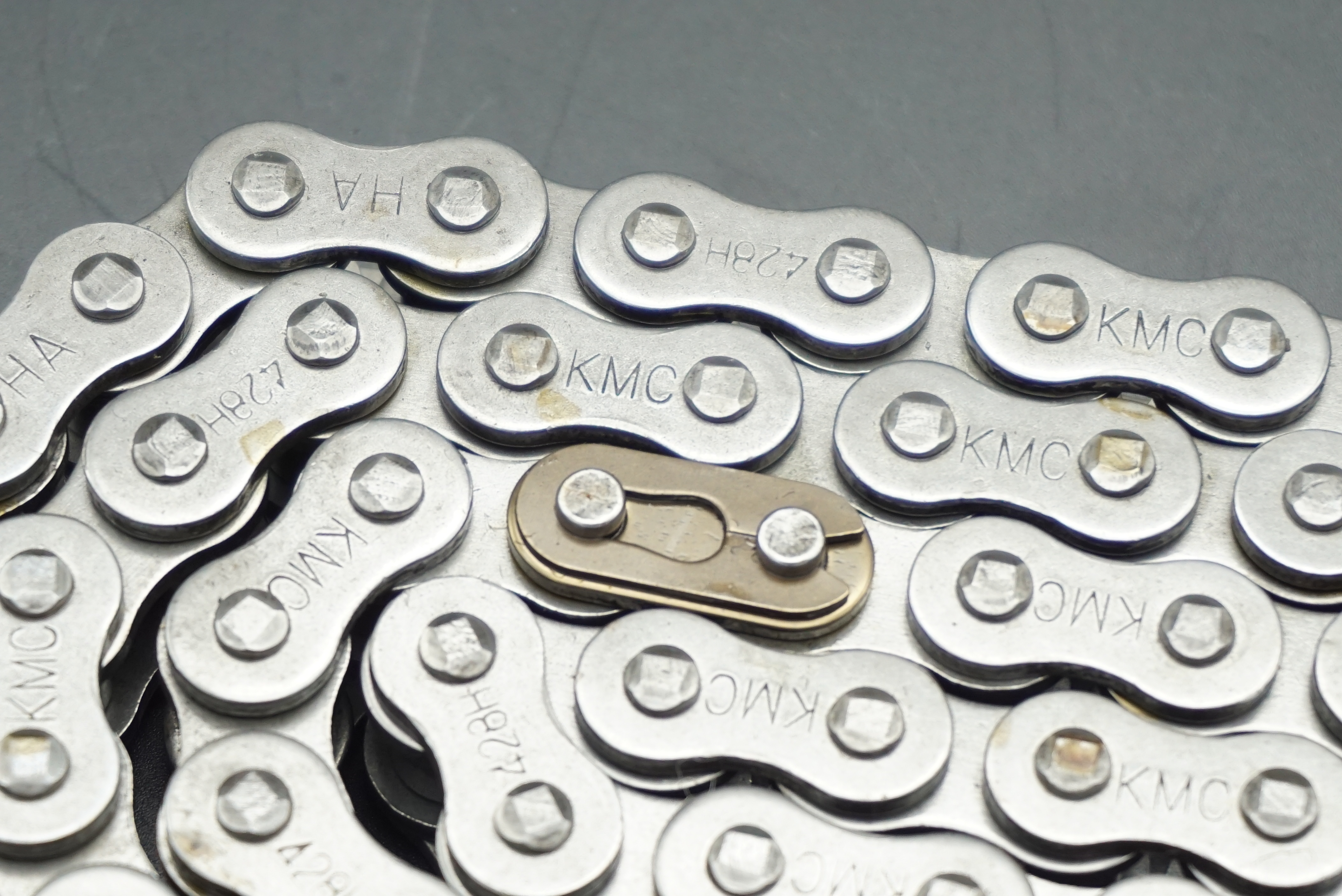
I. Basic Understanding of Key Dimensions and Tolerances of Roller Chains
1. Definition of Core Dimensions The dimensional tolerances of roller chains revolve around their core components. Key dimensions include the following categories, which are also the core objects of tolerance control:
* **Pitch (P):** The straight-line distance between the centers of two adjacent pins. This is the most critical dimensional parameter of the roller chain, directly determining the meshing accuracy with the sprocket. For example, the standard pitch of a 12B type double-row roller chain is 19.05mm (data sourced from industry-standard parameters). Deviations in pitch tolerance will directly lead to excessive or insufficient meshing clearance.
Roller outer diameter (d1): The maximum diameter of the roller, which must precisely match the sprocket tooth groove to ensure smooth contact during transmission.
Inner link inner width (b1): The distance between the chain plates on both sides of the inner link, affecting the flexible rotation of the roller and the fitting accuracy with the pin.
Pin diameter (d2): The nominal diameter of the pin, whose fitting tolerance with the chain plate hole directly affects the chain’s tensile strength and wear resistance.
Chain plate thickness (s): The nominal thickness of the chain plate, whose tolerance control affects the chain’s load-bearing capacity and structural stability.
2. The Essence and Significance of Tolerances Dimensional tolerance refers to the allowable range of dimensional variation, i.e., the difference between the “maximum limit size” and the “minimum limit size”. For roller chains, tolerance is not simply “allowable error,” but rather a scientific standard that balances production processes and usage requirements while ensuring product interchangeability and adaptability: Too loose a tolerance: This leads to uneven meshing clearance between the chain and sprocket, causing vibration, noise, and even tooth skipping during operation, shortening the lifespan of the transmission system; Too tight a tolerance: This significantly increases manufacturing costs and, in practical applications, is prone to jamming due to changes in ambient temperature or slight wear, thus affecting practicality.
II. Detailed Explanation of Mainstream International Roller Chain Dimensional Tolerance Standards The global roller chain industry has formed three core international standard systems: ANSI (American Standard), DIN (German Standard), and ISO (International Organization for Standardization). Different standards have different focuses in terms of tolerance precision and applicable scenarios, and are all widely used in global industrial production.
1. ANSI Standard (American National Standard)
Scope of Application: Primarily used in the North American market and most industrial transmission scenarios worldwide, especially in motorcycles, general machinery, and automated equipment.
Core Tolerance Requirements:
* **Pitch Tolerance:** Emphasizing transmission precision, for A-series short-pitch roller chains (such as 12A, 16A, etc.), the single-pitch tolerance is typically controlled within ±0.05mm, and the cumulative tolerance across multiple pitches must comply with ANSI B29.1 standards.
* **Roller Outer Diameter Tolerance:** Adopting a design of “upper deviation is 0, lower deviation is negative,” for example, the standard roller outer diameter of the 16A roller chain is 22.23mm, with a tolerance range typically between 0 and -0.15mm, ensuring a tight fit with the sprocket teeth.
Key Advantages: High degree of dimensional standardization, strong interchangeability, and tolerance design that balances precision and durability, suitable for high-speed, medium-to-heavy-load transmission requirements. This directly reflects its core advantage of “Precise size and tolerance” (derived from industry standard characteristics).
2. DIN Standard (German Industrial Standard)
Scope of Application: Dominates the European market, with prominent applications in precision machinery, high-end transmission equipment, and the automotive industry—fields with stringent precision requirements.
Core Tolerance Requirements:
* Inner Link Width Tolerance: Controlled with precision exceeding ANSI standards. For example, the standard value for the inner link width of the 08B industrial transmission double-row chain is 9.53mm, with a tolerance range of only ±0.03mm, ensuring uniform clearance between the rollers, chain plates, and pins, reducing operational wear.
* Pin Diameter Tolerance: Employs a design with “lower deviation of 0 and upper deviation of positive,” forming a transition fit with the chain plate holes, improving the chain’s tensile strength and assembly stability.
Key Advantages: Emphasizes precise dimensional coordination across all dimensions, resulting in a narrower tolerance range. Suitable for low-noise, high-precision, and long-life transmission scenarios, often used in automated production lines with extremely high operational stability requirements.
3. ISO Standard (International Organization for Standardization Standard)
Scope of Application: A globally applicable harmonized standard designed to combine the advantages of ANSI and DIN standards. Suitable for cross-border trade, international cooperation projects, and equipment requiring global sourcing.
Core Tolerance Requirements:
Pitch Tolerance: Utilizing the midpoint between ANSI and DIN values, the single pitch tolerance is typically ±0.06mm. Cumulative tolerance increases linearly with the number of pitches, balancing accuracy and cost.
Overall Design: Emphasizing “versatility,” all key dimensional tolerances are designed for “global interchangeability.” For example, parameters such as the pitch tolerance and roller outer diameter tolerance of double-pitch roller chains can be adapted to sprockets conforming to both ANSI and DIN standards.
Key Advantages: Strong compatibility, reducing the compatibility risks of cross-border equipment matching. Widely used in large equipment such as agricultural machinery, port machinery, and construction machinery.
Comparison of Core Parameters of Three Major Standards (Taking a Short-Pitch Single-Row Roller Chain as an Example)
Dimensional Parameters: ANSI Standard (12A) DIN Standard (12B) ISO Standard (12B-1)
Pitch (P): 19.05mm 19.05mm 19.05mm
Pitch Tolerance: ±0.05mm ±0.04mm ±0.06mm
Roller Outer Diameter (d1): 12.70mm (0~-0.15mm) 12.70mm (0~-0.12mm) 12.70mm (0~-0.14mm)
Inner Pitch Width (b1): 12.57mm (±0.08mm) 12.57mm (±0.03mm) 12.57mm (±0.05mm)
III. Direct Impact of Dimensional Tolerances on Roller Chain Performance
The dimensional tolerance of roller chains is not an isolated parameter; its precision control is directly related to the core performance of the transmission system, specifically reflected in the following four aspects:
1. Transmission Accuracy and Stability
Pitch tolerance is the core factor affecting transmission accuracy: if the pitch deviation is too large, “tooth mismatch” will occur when the chain and sprocket mesh, leading to transmission ratio fluctuations, manifested as equipment vibration and unstable output torque; while precise pitch tolerance ensures that each set of chain links perfectly matches the sprocket tooth grooves, achieving smooth transmission, especially suitable for precision machine tools, automated conveyor lines, and other scenarios with high precision requirements.
2. Wear Life and Maintenance Costs Improper tolerances in the roller’s outer diameter and inner width will lead to uneven force on the roller within the tooth grooves, resulting in excessive local pressure, accelerating roller wear and sprocket tooth wear, and shortening chain life. Excessive tolerances in the fit between the pin and the chain plate hole will cause the pin to wobble within the hole, generating additional friction and noise, and even causing “loose chain links” faults. Excessive tolerances will restrict chain link flexibility, increase transmission resistance, and similarly accelerate wear.
3. Assembly Compatibility and Interchangeability Standardized tolerance control is a prerequisite for roller chain interchangeability: Roller chains conforming to ANSI, DIN, or ISO standards can be seamlessly adapted to any brand of sprockets and connectors (such as offset links) of the same standard without additional adjustments, greatly improving the efficiency of equipment maintenance and replacement, and reducing inventory costs.
4. Noise and Energy Consumption High-tolerance roller chains exhibit minimal impact and uniform frictional resistance during operation, effectively reducing transmission noise. Conversely, chains with larger tolerances generate high-frequency impact noise due to uneven meshing clearances. Furthermore, the additional frictional resistance increases energy consumption, significantly raising long-term operating costs.
IV. Roller Chain Dimensional Tolerance Inspection and Verification Methods
To ensure that the roller chain meets tolerance standards, verification through professional inspection methods is required. The core inspection items and methods are as follows:
1. Key Inspection Equipment
Pitch Inspection: Use a pitch gauge, digital caliper, or laser rangefinder to measure the pitch of multiple consecutive chain links and take the average value to determine if it is within the standard range.
Roller Outer Diameter Inspection: Use a micrometer to measure the diameter at different cross-sections of the roller (at least 3 points) to ensure that all measurements are within the tolerance range.
Inner Link Inner Width Inspection: Use a plug gauge or inside micrometer to measure the inner distance between the two sides of the chain plates of the inner link to avoid tolerance exceeding the standard due to chain plate deformation.
Overall Accuracy Verification: Assemble the chain onto a standard sprocket and conduct a no-load run test to observe for any jamming or vibration, helping to determine whether the tolerance meets the actual application requirements.
2. Inspection Precautions
Inspection should be conducted at room temperature (typically 20±5℃) to avoid thermal expansion and contraction of the chain due to temperature changes, which could affect measurement accuracy.
For multi-link chains, the “cumulative tolerance” must be checked, i.e., the deviation of the total length from the standard total length, to ensure compliance with standard requirements (e.g., ANSI standard requires a cumulative pitch tolerance of no more than ±5mm for 100 chain links).
Test samples should be randomly selected to avoid judgment bias due to accidental errors of a single product.
V. Selection Principles and Application Recommendations for Tolerance Standards
Selecting a suitable roller chain tolerance standard requires comprehensive judgment based on the application scenario, equipment requirements, and global supply chain needs. The core principles are as follows:
1. Matching by Application Scenario
High speed, medium to heavy load, precision transmission: DIN standard is preferred, such as for precision machine tools and high-speed automated equipment.
General industrial transmission, motorcycles, conventional machinery: ANSI standard is the most cost-effective choice, with strong adaptability and low maintenance costs.
Multinational supporting equipment, agricultural machinery, large construction machinery: ISO standard ensures global interchangeability and reduces supply chain risks.
2. Balancing Precision and Cost
Tolerance precision is positively correlated with manufacturing cost: DIN standard precision tolerances result in higher production costs than ANSI standards. Blindly pursuing excessively strict tolerances in ordinary industrial scenarios leads to wasted costs; conversely, using looser tolerance standards for high-precision equipment can affect equipment performance and lifespan.
3. Matching Component Standards
The tolerance standards of roller chains must be consistent with those of matching components such as sprockets and drive shafts: For example, equipment using ANSI standard sprockets must be paired with ANSI standard roller chains to avoid poor meshing due to incompatible tolerance systems.
Conclusion
The dimensional tolerance standards of roller chains are the core principle of “precise coordination” in the industrial transmission field. The formation of the three major international standards—ANSI, DIN, and ISO—represents the culmination of global industry wisdom in balancing precision, durability, and interchangeability. Whether you are an equipment manufacturer, service provider, or purchaser, a deep understanding of the core requirements of tolerance standards and the selection of the appropriate standard system based on the application scenario are essential to maximizing the transmission efficiency of roller chains and improving equipment stability and lifespan.
Post time: Dec-19-2025